Explore Ideas
Explore Ideas
Questioning what we take for granted. Opening up possibilities for change.

Thinking differently about professional practice, organisational change and collective action .
Our professional and organisational lives are shaped by ideas about leadership, authority, success, participation and change. Many of these assumptions become so familiar that we rarely stop to question them. Yet the questions we ask (and those we leave unasked) influence how we understand problems, whose knowledge we value, and what possibilities for action we can recognise. At Changemakers, we draw upon the philosophy and pedagogy of Paulo Freire, alongside other traditions of critical thought and practice, to explore these questions. We are interested not simply in how individuals and organisations can become more effective, but in how they can develop a deeper understanding of their circumstances, challenge established assumptions and create opportunities for meaningful change. Explore the themes below to discover different ways of thinking about professional practice, organisational life and collective action.
Five areas for critical inquiry
These five interconnected themes provide starting points for exploring questions that matter in professional, organisational and community settings. Each brings together practical concerns, critical perspectives and opportunities for further learning.

Critical Leadership & Power
Who has power, how is it exercised, and what does it mean to empower others?
Leadership is often presented as a matter of individual qualities, skills and decisions. But leadership also takes place within relationships, institutional structures and systems of authority that shape what people can say, decide and do. A critical approach invites us to look beyond the qualities of individual leaders and examine how power operates, whose interests are represented, and how responsibility and authority might be shared. What happens when empowerment means more than delegation? Can leadership become a genuinely collective practice? How might organisations create conditions in which people have greater influence over the decisions affecting them?

Critical Coaching & Professional Practice
How do we develop our practice while questioning the conditions that shape it?
Professional development frequently emphasises personal goals, performance and individual responsibility. Yet our choices and opportunities are also shaped by organisational expectations, professional cultures, social relationships and wider structures of power. Critical coaching and reflective practice create space to examine these influences, rather than assuming that every professional difficulty can be resolved through greater motivation, confidence or individual effort. Who defines professional success? What assumptions shape our goals? How might reflection help us question not only what we do, but also the circumstances in which we work?
Dialogue & Participation
What makes dialogue meaningful, and when does participation genuinely influence decisions?
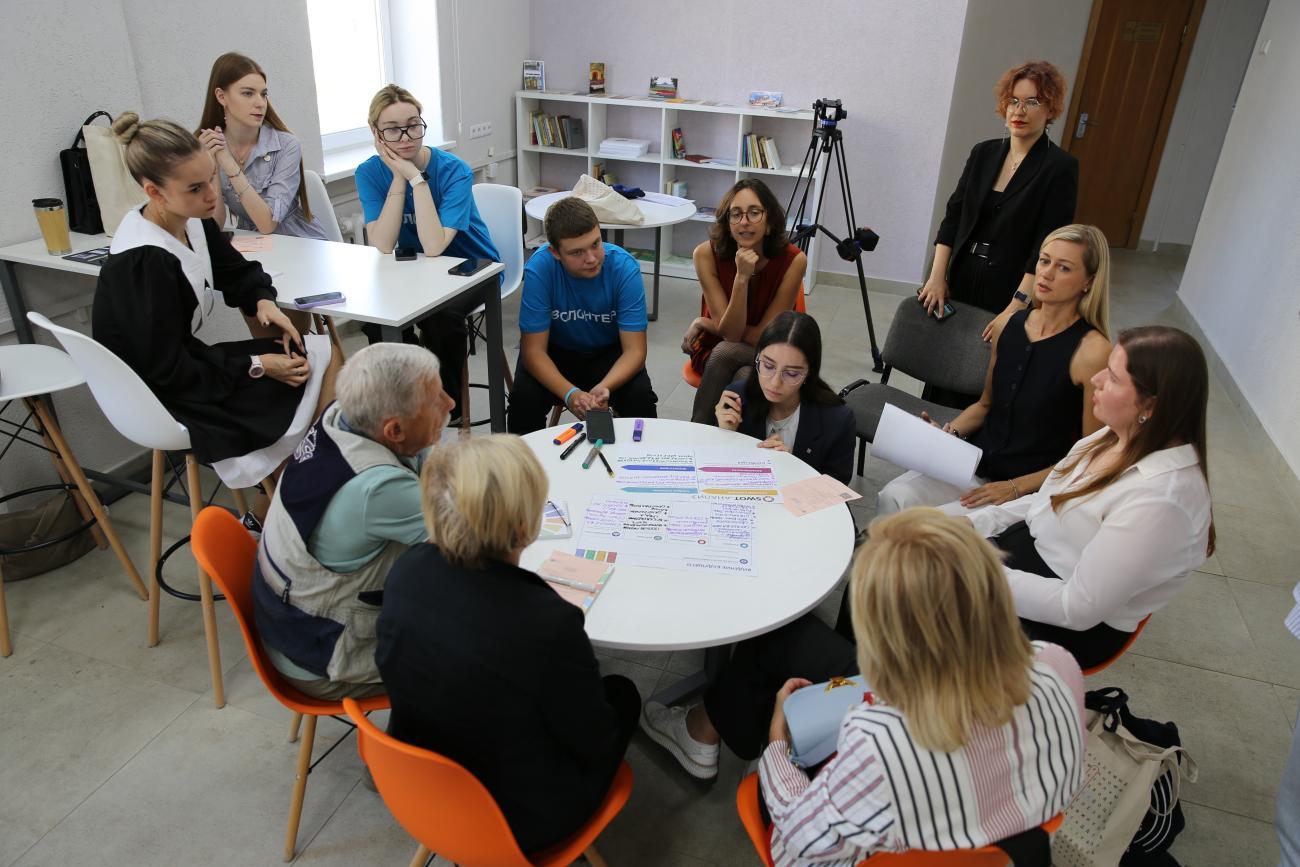
Organisations regularly consult, engage and involve people. But being invited to express a view is not necessarily the same as having the power to shape what happens. Meaningful dialogue involves more than exchanging information or reaching agreement. It requires attention to relationships, differences in power, the recognition of different forms of knowledge and a willingness to question established understandings. Whose voices are heard, and whose are missing? Who decides which questions are open for discussion? What distinguishes genuine participation from consultation about decisions that have effectively already been made?

Organisational Strategy & Change
What if meaningful change begins by questioning how we define the problem?
Organisational strategy often begins with priorities, objectives and plans. But before deciding what needs to change, it is worth examining how existing problems have been understood, whose perspectives have shaped that understanding and which assumptions remain unchallenged. A critical approach to strategy treats organisations as social environments shaped by relationships, histories, competing interests and unequal power — not simply as systems to be managed. Who defines the organisation's problems? What knowledge is missing from strategic discussions? How can planning become a process of collective enquiry, learning and action rather than simply a document or set of targets?
Community & Collective Action
How can people move from being consulted about change to becoming agents of change?
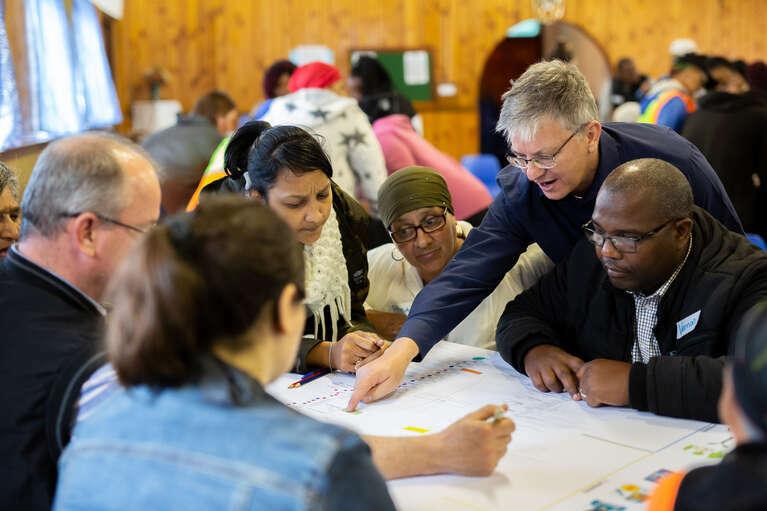
Community engagement is frequently organised around priorities established by institutions, service providers or funding bodies. Communities may be invited to contribute ideas without necessarily having the opportunity to define the issues or determine the direction of action. Drawing upon traditions of popular education, participatory learning and collective organising, we explore approaches that recognise people as producers of knowledge and active participants in shaping their own circumstances. Who sets the agenda for community development? How can shared experiences become a starting point for critical understanding? What conditions enable people to organise, develop collective agency and act together?
The ideas that connect our work
Freirean foundations The themes above are connected by a shared understanding of learning and change. The Brazilian educator and philosopher Paulo Freire challenged approaches to education that treat people as passive recipients of knowledge. Instead, he argued for learning rooted in people's experiences, developed through dialogue and critical enquiry, and connected to action in the world. Although Freire's work emerged from struggles around education, inequality and liberation, his ideas also provide important starting points for examining professional relationships, organisational power, leadership and participation. Several interrelated concepts are particularly relevant to our work.
- Dialogue: learning and understanding together Dialogue is more than conversation. It involves recognising the knowledge and experiences of others, questioning our assumptions and developing understanding through relationships characterised by mutual respect and critical engagement.
- Problem-posing: questioning how problems are understood Rather than beginning with predetermined answers, problem-posing enquiry starts with real situations and examines the assumptions, relationships and social conditions that shape them.
- Critical consciousness: recognising the forces shaping our lives Sometimes described as conscientisation , this involves developing a more critical understanding of social realities, power relations and the possibilities for transforming them.
- Praxis: connecting reflection and action Critical understanding is not an end in itself. Praxis brings reflection and action into a continuing relationship, through which people seek to understand and transform their circumstances.
- Collective agency: developing the capacity to act together Meaningful change is not simply a matter of individual empowerment. It also depends upon relationships, solidarity, shared understanding and opportunities to influence the conditions of collective life.
These are not fixed techniques to be applied uniformly in every setting. They are ideas that invite continued questioning, interpretation and experimentation in practice. The wider Freire Institute website provides more extensive introductions to these ideas and their educational foundations. Explore Paulo Freire's key concepts on the Freire Institute websiteLearn about Paulo Freire and his educational philosophy
From critical questions to meaningful action
Critical inquiry is not only about identifying problems or challenging established ways of thinking. It is also concerned with discovering possibilities for action. At Changemakers, we are interested in the relationship between the questions people ask, the knowledge they develop together and the changes they seek to make. Four questions run through much of our work:
What is happening, and how do we understand it?
Exploring lived experiences, organisational realities and the assumptions that shape our interpretations.
Whose knowledge, interests and experiences count?
Examining authority, power, participation and the perspectives that may be overlooked or excluded.
How can we develop understanding together?
Creating opportunities for dialogue, critical reflection and collaborative learning.
What possibilities for action emerge, and what can we learn from taking action?
Connecting inquiry with practical experimentation, collective action and further reflection.
These questions do not constitute a prescribed model or a sequence of steps. They offer starting points for enquiry that can be revisited as understanding develops and circumstances change.
Continue exploring
Ideas become more useful when we have opportunities to examine them in depth, connect them with experience and test them in practice. Through Changemakers and the wider Freire Institute, you can pursue these questions in different ways.
- Read, question and reflect Discover educational guides, discussion papers, practical exercises and articles exploring critical professional practice, leadership, dialogue and organisational change. Explore the Resource Library
- Learn with others Explore courses, workshops and educational programmes that bring critical ideas into conversation with lived experience and professional practice. Explore Courses & Programmes
- Explore opportunities for collaboration Our coaching, mentoring, training, facilitation and consultancy work creates spaces for individuals, teams and organisations to examine significant questions and develop their own approaches to change. Discover What We Do
An invitation to inquiry
Whether you are reflecting on your professional practice, questioning established approaches to leadership, exploring organisational change or working with communities, we invite you to begin with the questions that matter in your own context. You do not need to arrive with a fully formed problem or a predetermined solution. Sometimes the most valuable starting point is recognising that there may be a different question to ask.
Explore an idea, follow a connection, or begin a conversation.